Wavemaker Magazine: A Toronto-based Music Junkie Warehouse
For a number of years this was the Wavemaker Magazine's website, a Toronto-based music junkie warehouse.
Content is from the site's 2012 archived pages of interviews and reviews providing just a glimpse of what this site offered its readership.
My life: I've always had an affinity for Wavemaker Magazine. During breaks at the warehouse where we handled shipments for a variety of products to stores across the US, I'd often lose myself in its pages. The magazine was my escape, introducing me to new and old bands/groups. It became a source of knowledge, and soon enough, I became the go-to person for music trivia. I even won some bets with my fellow warehouse workers when we had disagreements about this or that blues artist or musician. They quickly learned not to challenge me after I won a couple of heated debates, all thanks to Wavemaker Magazine. When the site disappeared, it was truly heart-wrenching. Although the current iteration of the site only has archived content, it still provides a nostalgic trip down memory lane. It was in one of those archived articles that I stumbled upon a feature about Raquel Welch. Wavemaker Magazine, renowned for its deep dives into music and pop culture, had ventured into the glamorous world of cinema and highlighted iconic figures like Raquel. The piece, titled "Raquel Welch: The Diva Behind the Wigs," delved into the intimate relationship between Raquel and her wigs. It shed light on how they weren't just fashion accessories but an integral part of her on-screen and off-screen identity. The article also touched upon the societal norms of the time, exploring how hairstyles were more than just a fashion statement and how Raquel used wigs to challenge and redefine those norms. Wavemaker, with its roots in music, also delved into any musical influences Raquel might have had. Were there blues artists she adored? Were her transformative looks influenced by the music of her era? This blending of worlds - of music, cinema, and fashion - showcased just how interconnected the arts were, and it was Wavemaker Magazine that brought it all to the forefront for readers like me.
HARMAINE SANTOS
Founder, Editor-in-chief, Contributor
Before diving into a hefty introduction, Charmaine would like to apologize in advance for all the Blues reviews that she will be writing in this blog. After years of chasing her friends away with banters about a bunch of old folks from the South and those damn boll weevils, she decided to create Wave Maker Magazine to feed her obsession. However, she promises that she will limit her Blues reviews to 1-2 posts per week with her fingers crossed. Now, onto the introduction …
Charmaine had a minor stint as a music journalist for a Toronto based literary and arts journal called The Toronto Quarterly. After a few album reviews and interviews with some cool Canadian cats, she decided to lint roller-ball the hairs off her coat and become her own boss by establishing Wave Maker Magazine. Along with her strange friends, she hopes that readers of Wave Maker Magazine will leave illuminated by the overabundance of brilliant music that we all have yet to uncover and explore together.
JUSTIN JAGAI
Contributor
Chances are, right now, Justin is either surfing the high-speed seas intending to pillage as much new music as his pirate heritage will allow, or, diligently and carefully crafting his 3 playlists, whilst hitting a Dr Who/24 marathon. With a music library at 1600 artists and growing, Justin dreams of becoming a Music Consultant – advising anyone looking to find something new or similar to their true loves. An avid concert goer, JJ hopes to meet his dream girl on the dance floor who will know all the words to Vampire Weekend, shake it to Childish Gambino and be proud of her love for Coldplay (because online dating sucks).
Michael O’Leary is a music lover to the detriment of all proportion in his life, and is okay with that. All of his tastes may be traced back to Dark Side of The Moon, probably. A graduate of the University of Toronto (Scarborough Campus [full disclosure]), and then of Centennial College’s Publishing program after a disillusioning post-graduation summer, Mike styles himself as something of a “free agent” in Canadian publishing. So if you need something edited, let him know. Mike lives in Toronto, and hopes to soon face a financial situation which will continue to facilitate this fact.
Decide for yourself whether Michael O’Leary has any business critiquing the musical works of others by visiting: http://soundcloud.com/the-mike-oleary-songbook
JACOB GOGUEN
Contributor
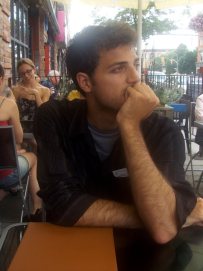
Who’s that concert-goer who hounds the road-crew for the setlist? That’s Jacob Goguen – a Beatles, Doors, and Simon & Garfunkel-raised music lover (and York University alumni) who today owns more CDs than he actually has room for.
Similarly, Jacob’s attended more gigs than he can possibly count, whether he’s been an eager Massey Hall audience member or taking the stage at the El Mocambo as one of his alt-rock band’s two guitarists.
While seeing Mogwai, Brian Wilson, Primal Scream, and PJ Harvey perform at Bestival are definite high points among Jacob’s live-show experiences, road-tripping from Toronto all the way down to Richmond, Virginia to see the one and only My Bloody Valentine stands – so far – as Jacob’s favourite music moment.
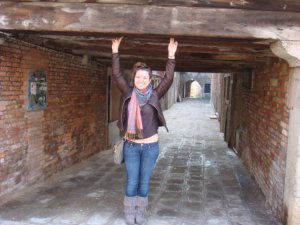
Sarah is a senior at Miami University (OH): the one with a coffee almost always in hand (iced, black), and a pen stuck somewhere in her ponytail. She was raised on Motown, the British invasion, and Detroit sports. Her obsession with good music is matched only by her obsession with good grammar. When she grows up, she wants to be a music journalist – because they get the best seats.
BENFAST
Contributor
A fourth-generation Vancouver Islander who embraces his Dutch heritage a bit too much, Ben’s mom calls him a renaissance man. Really, this UVic history student, photographer, musician, and postcard collector is just curious and always likes to try to new things.
Easily swayed into playing violin after watching Music of the Heart, and later switching to bass to play jazz and rock music, Ben’s musical tastes vary greatly. From Bruce Cockburn to Beethoven, his playlists are eclectic. Writing about music stems from these choices as Ben is constantly defending his tastes.
Bringing you stories from Canada’s Left Coast, put your hands together for Ben Fast.
RYAN SMITH
Contributor
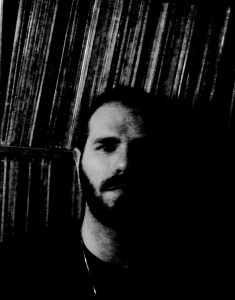
“Whenever you find yourself on the side of the majority, it is time to pause and reflect.” – Mark Twain
Ryan spends a great deal of his time under troll bridges shaking his fist and hollering obscenities at the mainstream, but occasionally finds himself on the side of a pop act that the underground has disowned. A schizoid fan for the 21st century?
Chalk it up to being born in the early eighties and being raised on prog-acts-gone-pop, revelling in the era of Seattle Sound, and performing as a vocalist and lyricist in hard rock and metal bands before finally becoming a minimalist composer.
Although he has a diverse musical taste that runs the gamut from black metal to country to most forms of jazz, Ryan’s first love will always be progressive music. He is well-read, cites Robert Fripp as a personal hero, and maintains that there’s nothing wrong with the flute!
“Man, I feel like a woman.” – Shania Twain
Artist Reviews | Up-and-Comers
The Choice Wasn’t Hard To Choose: Spotlight on Astra
By wavemakermagazine • August 17, 2012 •
Friends, I hope you’ll pardon the imagery when I tell you that Astra is a prog fan’s wet dream. Formed in 2001 as Silver Sunshine, the band took on new members in 2006 and renamed themselves Astra. Fortunately, unlike many of their peers, the band has managed to keep all of their members since the change. Hailing from San Diego, California, it is amazing to me how these gentlemen manage to make such quintessentially English music.
I caught up with their music in 2009, with the release of their debut album The Weirding, and I’m not proud about how I discovered them either. I judged a book by its cover. The cover of the first record is wonderfully similar to the Roger Dean covers for artists like Yes, Gentle Giant, Uriah Heep, Asia, and many other god-like silhouettes on the prog horizon. Their band name also happens to be the name of Asia’s third album. Flipping the jewelcase over, I noticed the Metal Blade Records emblem. This worried me. I thought I was going to be listening to another Dragonforce-like we-think-we’re-prog act. Don’t get me wrong, I love metal and I’m happy Metal Blade took a chance on these guys, but this was the impression I got. When I brought it home, I found no semblance of metal on the record, but oh boy, I found prog! Like being visited by the ghost of 1971, I found prog!
Listening to the record, I hereby promise that you’ll hear aspects of all the greats. The oppressive mellotrons of King Crimson; the rampant moogs of Yes, ELP, and Camel; the beautiful flute of Genesis, Camel, and Tull (I urge you to listen to their demo track “Winter Witch” to hear the flute in its full glory); the guitars and vocal harmonies of Pink Floyd, and the list goes on. Stylistically, their execution is their own, however (there is a version of Floyd’s “Empty Spaces” out there composed and performed by Astra and it’s barely recognisable… in a good way). While the album sounds like it was recorded in 1971, it has the sombre tonality of young, modern players. Just listen to “Silent Sleep” and you’ll know what I mean.
There was also a rumour that circulated about a synchronicity between The Weirding and the Ron Howard film Cocoon. I have to admit that I tried it out a few times. While the two don’t sync up anywhere near as eerily as Dark Side of the Moon does to The Wizard of Oz, there are some really neat moments, and the music does go really well with some of the imagery. The otherworldly textures of their music is simply perfect for film. The band had posted on their official site a fan-made video that put their song “The Rising of the Black Sun” with some of the classic rotoscoped footage from various Ralph Bakshi films. Someone call Mr. Bakshi. We need an Astra film.
It was a long wait for their second album, The Black Chord, released earlier this year. I was there with bells on. I was not disappointed. The new record sees the band heading into a more midseventies sound with more of an emphasis on Pink Floyd elements.
While I admit that I didn’t find the record quite as memorable as the first, this is a normal thing for bands, so it didn’t bother me terribly. The adage is that you have your whole life to write your first record and one or two years to write your second. In short, the only downfall of the record when compared to The Weirding is that it doesn’t seem as well rehearsed. In other words, like the songs haven’t been played for ten years before finally signing a record deal. That being said, the record is a fantastic display of virtuosity and is filled with many rich, cascading layers, and the quality of its recording is pristine. The title track and “Quake Meat” are standouts for me at this point. But stuff like that changes for me all the time. The artwork is again brilliant and captures the change to an edgier landscape than that of its predecessor.
These two wonderful albums must be a part of any true prog fan’s collection and I also urge you to check out the solo projects. I know guitarist/keyboardist Brian Ellis and drummer/flautist David Hurley both have notable solo projects.
Mark it, this band should be up there with the pantheon!
+++
Keep Your Eyes Peeled for: Sunsplitter
By wavemakermagazine • July 13, 2012
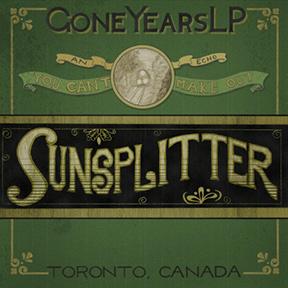
You can call it the antithesis to some of today’s boneless music. Folk is witnessing a revival in the indie scene, and those who are nostalgic for rooted music are excited, including myself. Perhaps it’s the honesty of homegrown music that listeners crave nowadays or that people simply want to hear a good story. Regardless, you can’t deny how refreshing it is to hear an upcoming band take on the genre and nourish it with their own unique twist.
Sunsplitter is a folk band whose origin spans from rural Ontario, Virginia, and the UK. Their first album, “Gone Years LP”, reminisces of the band’s youth years gone by and expresses an appreciation for the simplicity bestowed only by life on the countryside. The album is a nostalgia trip, and it brings to light the simpler moments of our past that some of us continue to yearn for with each passing day. As Sunsplitter’s Dylan expressed, “Folk is a genre that returns us home.“
The release of “Gone Years LP” marks the beginning of a new chapter for Sunsplitter, and the band welcomes you all to take part in their musical journey by watching their debut show on July 16 at Supermarket (Kensington Market). Physical copies of “Gone Years LP” will be available later this summer, but you can jump over to Sunsplitter’s Bandcamp to download and listen to their full album now!
Now, it is with great pleasure that I introduce to you up-and-coming folk band, Sunsplitter!
Charmaine: Tell us the story of Sunsplitter’s beginnings and the band’s evolution over the years.
Dylan: Sunsplitter was sparked in high school days when Matt (Watton), Alex Turnbull (our previous guitar player) and I used to get together to jam, because we were some of the only kids in school that played instruments. We explored a kaleidoscope of genres as we grew up (jazz, progressive rock, psychedelic fusion, etc.), so the band’s identity fluctuated fluidly along with our own teenage perceptions of ourselves. There remained one, solid constant throughout these genres, however, and that was our shared love for having a strong “concept”. Albums like Pink Floyd’s “Dark Side of the Moon” and Bruce Springsteen’s “Nebraska” amazed me because they created such a strong world for the listener to be absorbed into.
After moving to Toronto from the rural outskirts, we crossed paths with Alex (Nathan), Keri (Kauffman), and Wyatt (Best) who not only struck us as great people, but as musicians that shared our vision for creating a particular sound. So we carried forward as Sunsplitter, and now I think that we’ve shaped a distinct ‘feel’ for our listeners.
The funny thing is that our collective experiences in previous bands (with completely dissimilar sounds) seem to have found little ways of trickling into our current sound, the same way memories or dreams come to you involuntarily, if that makes any sense. I think our diverse musical backgrounds allow us to traverse our soundscape so thoroughly.
It’s interesting too that over the years there have been a handful of members fall off or join; such a wide array of personalities that the band as it stands now has its own character with its own conflicts and stories chiselled into its history.
Alex: That’s also part of the reason our album is called ‘Gone Years LP’. It took a long time for the right musicians, ideas and tunes to come together and blend perfectly.
I’ve just made the band sound like a Scotch. That’s ok!
Charmaine: It’s a genre that’s considered “traditional” or outdated in today’s music industry, so why, of all genres, have you decided to play folk music?
Wyatt/Keri: In recent years it seems that there has been a rebirth and refocusing on roots music and folk, bluegrass, and Americana. You can hear traces of its influence all over contemporary pop music too, in artists like The Arcade Fire, Beck, or even Adele. Folk can be so visceral. It has a raw emotional quality that people are quick to identify with. It’s that “three chords and the truth” thing. People respond to honesty and story-telling.
Dylan: Most of us grew up in largely rural settings and so we like to think that our shared musicianship elicits a sort of nostalgia based around the growing pains of youth – something that anyone can relate to. Moving to Toronto perhaps made us develop a stronger appreciation for and connection to the rustic elements of the countryside; the stars, the lakes, the hills. Folk is a genre that returns us ‘home’. None of this is to say that we don’t love Toronto – quite the opposite – but we do deal with that dissonance between city and country and we think that’s apparent in our music.
Charmaine: Can you recall the musical influences that helped to shape your sound? What qualities have you extracted from them that can be heard in your music today?
Dylan: Where I grew up, you had to drive just to go buy milk; the bus ride to school was almost an hour. Because of that distance, I listened to a lot of music in my parents’ cars. A lot of my influence comes from tapes that my dad would play – I must have heard hundreds of bands by the time I was five. I remember his favourites being Neil Young, Bob Dylan, and Tracey Chapman.
At the time, it wasn’t something I ever asked to listen to. I always wanted to listen to the pop chart toppers on the radio. After growing up and moving to the city however, I found myself reaching back to that time, and I think that’s why this genre is so appealing to me now. I started listening to bands like Frontier Ruckus, the Counting Crows and musicians like Joni Mitchell and Sufjan Stevens.
Alex/Matt: We also take influence from groups in other genres. The Hold Steady – there’s a great example of story-telling – Murder by Death, for their musicianship and instrumentation…
Wyatt: The Band, for their subtlety and nuance. When playing in our style it’s important to use a light touch and let the song tell you where to go. We’re actually thinking of doing a version of ‘Acadian Driftwood’.
Charmaine: What’s on the agenda for Sunsplitter this summer?
Alex/Matt: We decided to record the album before playing any shows so that when we did start to play live we’d have thoroughly crafted our sound. Having just released the album online the plan for the summer is to introduce ourselves to the local folk scene(s), make some friends, meet some cool bands to play with and reach out to some new fans. We’re starting to line up some shows, our first being on July 16th at Supermarket (Kensington Market) with Darren Eedens, a great local musician. We want to take our music outside the city too – to play in the places that inspired the sound on ‘Gone Years’. We’re just in the midst of planning a show in Port Hope for August, and we’ll have pressed CDs for sale by the time that gig rolls around.
Charmaine: Do you guys have any last words for Wave Maker’s readers?
Thanks for taking the time to check us out! You can find us at:
- Website: www.sunsplittermusic.com
- Bandcamp: www.sunsplittermusic.bandcamp.com
- Twitter: www.twitter.com/sunsplitterband
- Facebook: www.facebook.com/sunsplitter

+++
Keep Your Eyes Peeled for: Air Marshal Landing
By wavemakermagazine • June 19, 2012

Today marks the anticipated online release of Air Marshal Landing’s sophomore EP, Vitamins. It’s been three years since the release of their first EP, The Industry, and the boys are now ready to showcase their evolving sound. Like Pink Floyd’s Meddle, The Beatles’s Revolver, and Bob Dylan’s Another Side of Bob Dylan, Vitamins is Air Marshal Landing’s transitional collection that offers us an aural taste of what a band sounds like as they enter the next chapter of their musical career.
To categorize Vitamins into one musical genre would be an aimless attempt, as each track contains its own unique character. The songs “Eve’s Apple” and “Meteor” clearly displays a wider range of intrumentation and a higher level of production, whereas “Vitamins” is unmethodical and natural. However,Vitamins is not necessarily a concept EP, and the band advises us to accept the songs as they are. It`s a collection of songs that the three loved to play, wanted to record, and eventually nestled into one EP. The band have also confirmed that Vitamins is the precursor to their debut full-length record that is set to be released at the end of 2012, so keep an eye out for that!
Vitamins couldn’t have come at a better time! It’s the perfect soundtrack to the sweet summer that awaits us!
Now, ladies and gents, read on as Matt Simmonds speaks to Wave Maker about Air Marshal Landing’s “I Didn’t Know I Was Pregnant” experience, their bonding over British rock, and the importance of taking our vitamins every day:
“Air Marshal Landing’s birth is like one of those stories you hear about a woman being pregnant without her knowing it until – BAM! – the baby is born! Cory and I had played music together all throughout our high school years, but despite our best efforts near the end of high school, we never formed a real band together. We wrote music and played as a duo (a little Simon & Garfunkle action) but never made a band. I met Graham at university through an on-campus church group. We played some music together. When school was over and summer came, Graham came to visit in Uxbridge. We jammed with Cory to some of our original tunes. Suddenly we had a 3-piece. And – BAM! – that was it, we were a band. We’ve never really given it a second thought since.
We all come from different musical backgrounds, but Cory and I initially bonded over a love for British rock. It’s the energy and British humour that we are drawn to, I think. We also all grew up in the church, so for better or worse, contemporary church music has probably had some impact on the way we think about song structure and harmony. I am classically trained on piano as well – again, for better or for worse.
The name our latest EP, ’Vitamins’, came from the fifth track of the EP by the same name. Once that song was written, it just seemed like a neat idea to use as the overall theme for the album. Vitamins the song is a bit of a love song. It basically suggests that stepping away from ‘yourself’ and giving to ‘another’ is what love is all about. And it’s a hard thing to do… to stop loving myself more than someone else. So, just like taking vitamins is a daily action, everyday I have to take another step in laying myself down.
If you`re thinking of checking out one of our lives shows, know that they`re a one-two punch of energy and joy! There is nothing the world that we like more than being on stage, and it should show. We really love it when everyone has a great time, so we try to help the cause.
We have a lot of shows coming up, including several in the great city of Toronto. We are also in the final stages of mixing our debut full-length record, which is slated for late 2012 release. There will be a single release for the album at some point this summer, we’re still in the planning stages for that.”
Vitamins can be downloaded and purchased from Air Marshal Landing’s Bandcamp under the pay-what-you-want model. Snag it for free, $1, or $192, 928! It’s all up to you!
Catch Air Marshal Landing at their upcoming shows!
June 22 - Duffy’s Tavern – The Hampton’s EP Release show
June 30 - BMO Field – Toronto FC Canada Day match
July 6 - The Annex Live – Fade Chromatic EP Release show
July 13 - The El Mocambo w/Boxfull of Groundhogs and Purpine & Goodralph
AIR MARSHAL LANDING LINKS:
- Website: http://airmarshallanding.com/
- Bandcamp: http://airmarshallanding.bandcamp.com/
- Facebook: https://www.facebook.com/airmarshallanding
- Twitter: https://twitter.com/amlband
- Soundcloud: http://soundcloud.com/airmarshallanding
+++
Keep Your Eyes Peeled for: The Rest
By wavemakermagazine • June 14, 2012

The making of The Rest’s third album, Seesaw, began under the most tragic circumstances when their friend, mentor, and producer, Dan Achen, passed away from a heartattack while playing hockey. As an homage to their late friend, the band recorded Seesaw at his converted church studio in the same manner as they would have if he was still alive. Satisfied with the album’s progress, they scheduled to release it in April 2011 until a bizarre hard-drive glitch erased every bit of sound that they had recorded and mixed! Six months later, and with the band nearly drained of hope, Seesaw was miraculously recovered by the same company that is responsible for airplane black box recovery!
With Seesaw uninjured and back in their possession, The Rest officially announced June 19, 2012 as the album’s highly anticipated release date.
When I first heard “Always On My Mind”, I was taken aback by Adam’s dynamic vocals. His voice resonates an enigmatic grace made more beautiful by a strain or ache emanating from his gut. Likewise, the instrumentals in this album captivates and entices its listeners to enter a chimera where one is left powerless against the influences of its wavering melodies, like holding tight to a moving seesaw. It’s not often that I find myself nearly falling off my chair in awe of what I am hearing. I have no doubt in my mind that The Rest will soon be celebrated as one of Toronto’s best indie bands of the current time. This is not an exaggeration - you can listen to their songs below or go to their shows to judge for yourself!
The Rest’s Adam Bentley chatted with Wave Maker Magazine about what sparked the band’s birth, their musical influences that helped to shape their sound, and the band’s plans for the coming future:
“The Rest started about 9 years ago when Blake and I foolishly had the idea to start a band with as many of our friends as possible. Luckily for us, most of our friends turned us down, but the guys you see in the band now were foolish enough to join us. I think we mainly wanted to have options and plenty of directions to take the music.
Right now, there are 7 members in The Rest, which has been consistent now for the last 6 years. Every member is a multi-instrumentalist and each brings various talents to the table. I think when we approach a song we try not to pigeonhole anyone in one place. This can sometimes be frustrating if you’re part of the first group working on the song, as you may hope or envision a certain sound and the layers can be taken in any direction the individual sees fit. I think it keeps every voice heard and also let’s the music feel alive. It feels like a real band.
Our interest and influences in music are quite varied. I’m personally always digging into as much music as my brain can handle, and I think through some form of musical osmosis, every bit that leaves a lasting impression seeps into the music somehow. It’s somewhat surprising to find that some of my all-time favourite albums have very little to do with the music The Rest is making. I think some artists create such a complete world over time that it’s tough to really fit into that space. It’s theirs. I think we’re always working to create that very space that we can call our own.
At the moment, there’s a plan in the works to make a video for every one of our song. We’ll see if we can achieve that goal, and we’re really going to try our best to accomplish this! We’re planning to tour behind the record in the fall, using the summer to plan everything out. We’re going to be very busy for the remainder of the year with lots of projects and ideas swirling around!
On June 22, we’ll be at The Drake Hotel for our album release show! We invite Wave Maker Magazine and all of their readers to stop by and enjoy the show! Three years between records builds a lot of energy!”